

Ever tackled a weekend project that turned into a month-long nightmare—and cost twice what a professional would have charged? You’re not alone, and understanding the true DIY versus professional cost comparison can save you hundreds or even thousands of dollars.
When weighing whether to handle a project yourself or hire a pro, most people look only at the sticker price. But the real cost equation includes materials, tools, time, mistakes, and opportunity cost. Let’s break down what actually goes into each option so you can make smarter decisions for your home or business.
The Hidden Costs of DIY Projects
At first glance, doing it yourself seems like the budget-friendly choice. No labor charges, right? But dig a little deeper and the numbers shift quickly.
First, there’s the cost of tools and equipment. That tile saw you need for one bathroom? It might sit in your garage for years after a single use. Specialized equipment often costs more to buy than to rent, and rentals still add up when a project drags on longer than expected.
Then there’s materials. Professionals buy in bulk and know exactly what they need. Homeowners typically overbuy out of caution or make multiple trips to the hardware store, paying retail prices each time. And when you make a mistake—cutting a board too short, mixing paint incorrectly, or miscalculating measurements—those materials go straight into the trash, along with your money.
Time Investment and Opportunity Cost in the DIY Versus Professional Cost Comparison
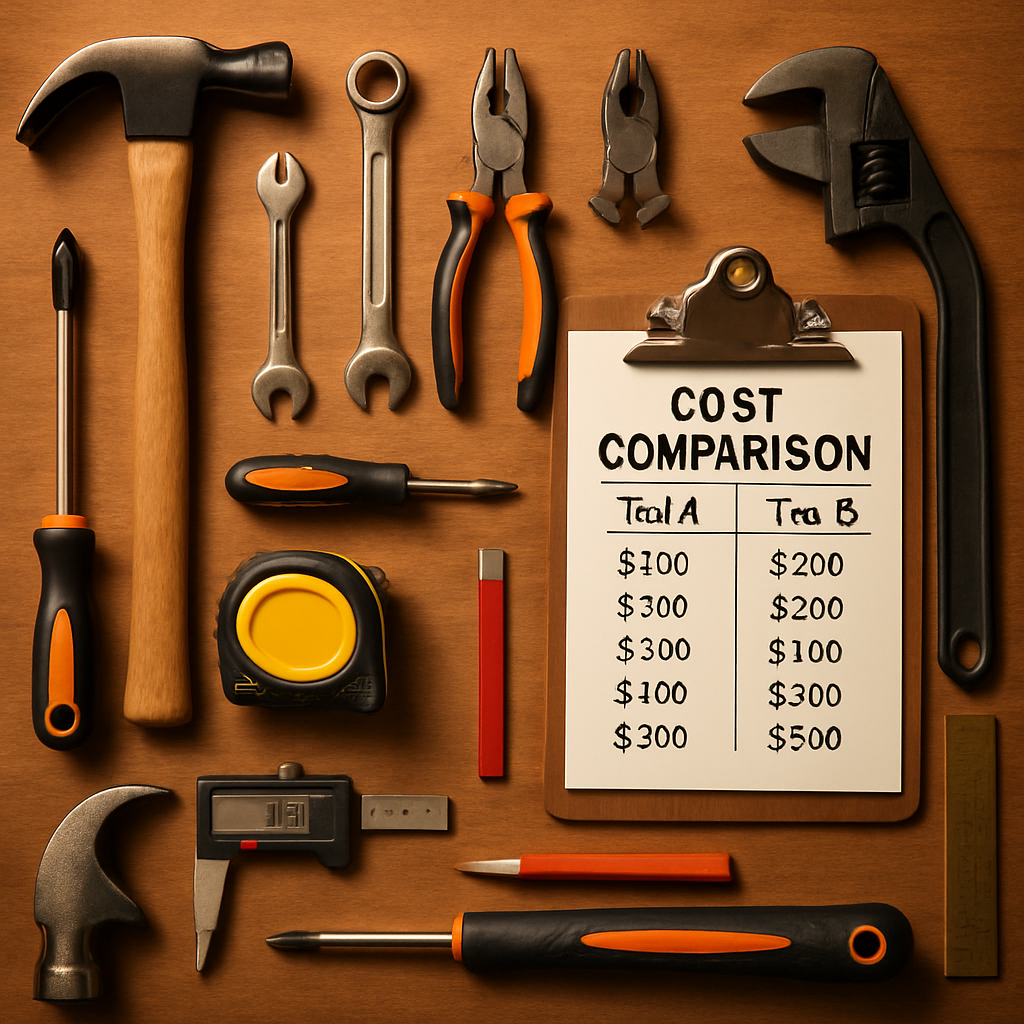
Your time has value, even if you’re not billing yourself by the hour. A project that takes a professional four hours might consume your entire weekend—or several weekends.
Consider what else you could be doing with that time. Spending it with family, working on your business, or simply relaxing all have real value. The Bureau of Labor Statistics tracks how Americans spend their time, and leisure hours are increasingly precious in our busy lives.
For business owners especially, time spent wrestling with a project outside your expertise is time not spent serving customers, developing your business, or earning revenue. If you bill at seventy-five dollars an hour and spend twelve hours on a project, that’s nine hundred dollars in lost income before you even buy your first supply.
Quality, Warranties, and Long-Term Value
Professional work typically comes with guarantees that DIY projects can’t match. Licensed contractors offer warranties on their labor. If something goes wrong six months later, they’ll make it right. When you do it yourself, you’re on the hook for any failures or defects.
There’s also the quality factor. An experienced professional has completed similar projects dozens or hundreds of times. They know the common pitfalls, the building codes, and the techniques that ensure lasting results. Your first attempt at the same project is exactly that—a first attempt.
Poor-quality work can actually decrease your property value. Potential buyers and their inspectors notice DIY electrical work that isn’t up to code, uneven tile installation, or painted-over problems. According to the National Association of the Remodeling Industry, professional renovations typically recoup a higher percentage of their cost at resale than amateur projects.
When DIY Makes Sense in the Cost Comparison

Despite these considerations, DIY definitely has its place. Some projects are genuinely straightforward and budget-friendly to tackle yourself:
- Painting interior walls in standard colors
- Installing curtain rods or shelving
- Basic landscaping like mulching or planting flowers
- Simple furniture assembly
- Minor cosmetic updates like replacing cabinet hardware
The sweet spot for DIY is projects where mistakes are easily fixable, special tools aren’t required, and the learning curve is gentle. If you enjoy the process and have realistic expectations about the time involved, these tasks can be satisfying and genuinely economical.
The True DIY Versus Professional Cost Comparison Formula
To make an honest cost comparison, add up everything:
DIY Total Cost: Materials + tools/equipment + disposal/waste + your time at a reasonable hourly rate + potential mistake costs + stress factor
Professional Total Cost: Quoted price + your time coordinating (minimal) – peace of mind value
When you run these real numbers, many projects flip. That deck renovation quoted at three thousand dollars might actually cost you twenty-five hundred in materials and tools, plus forty hours of your time. If your time is worth even twenty-five dollars an hour, you’re already at forty-five hundred dollars—and that assumes everything goes perfectly.
Making the Smart Choice for Your Situation
The best approach often combines both strategies. Handle the simple stuff yourself and bring in professionals for complex, high-stakes, or specialized work.
Projects involving electrical, plumbing, structural changes, or permits almost always benefit from professional expertise. The cost of fixing a serious mistake—or the liability if someone gets hurt—dwarfs any savings.
Our team works with clients throughout the local area who’ve learned this lesson the hard way. We’ve rescued countless half-finished projects and helped people understand which tasks suit their skills and which ones need expert hands. If you’re weighing a project right now and aren’t sure which path makes sense, we’re happy to talk through your options with no pressure—just honest advice from folks who’ve seen it all. Reach out anytime to discuss what makes the most sense for your specific situation and budget.
2 thoughts on “DIY Solutions vs Hiring a Professional: True Cost Analysis”
Comments are closed.