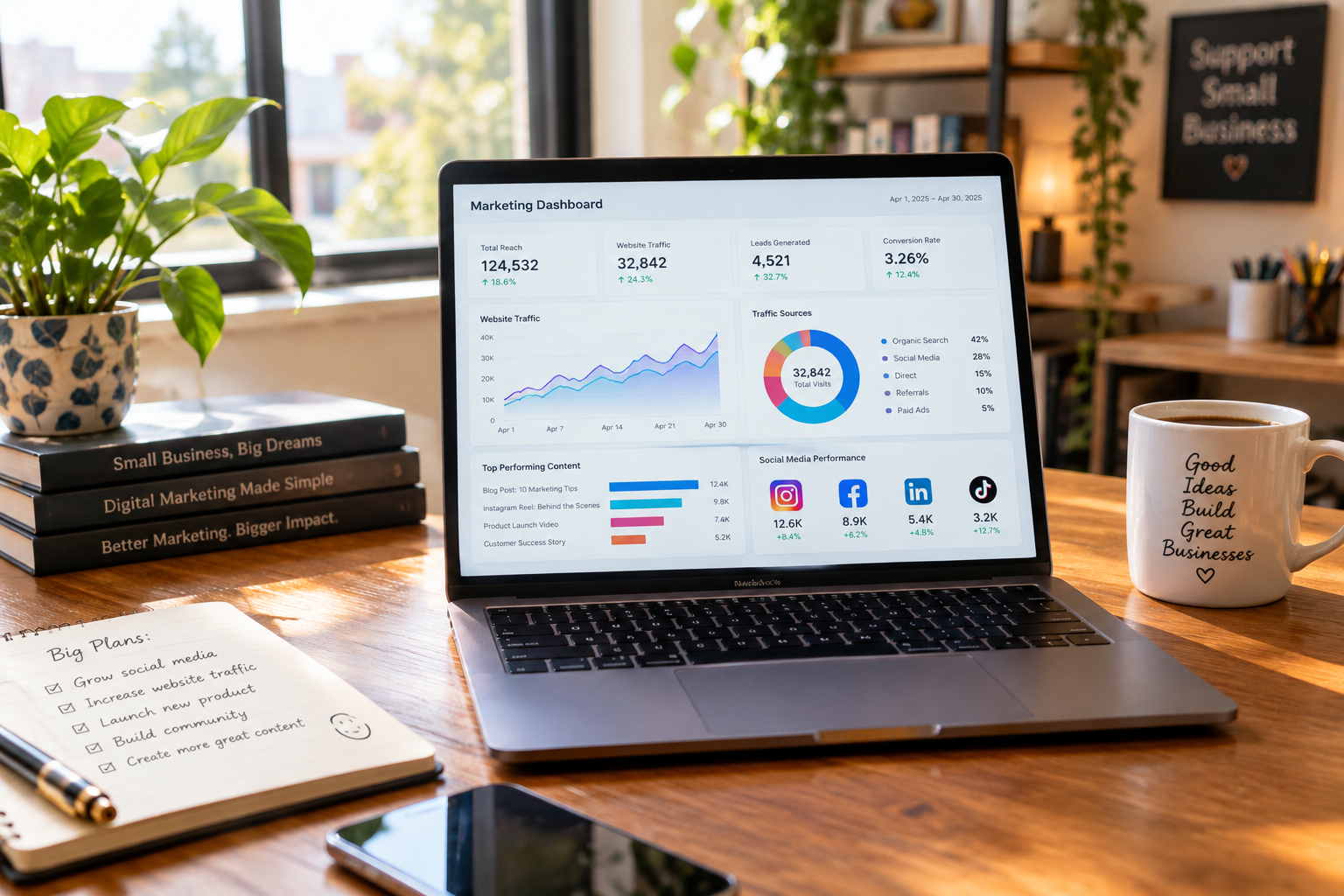
Did you know that small business owners spend an average of 11 hours per week on marketing tasks alone? For a team of one or two, that’s nearly a third of the workweek devoted to emails, social posts, and campaign management.
The good news? AI marketing tools for small businesses are changing the game, helping local shops and service providers reclaim precious hours without sacrificing the personal connection that makes them special. These technologies aren’t about replacing the human touch—they’re about making everyday tasks faster and smarter so you can focus on what you do best.
What AI Marketing Tools for Small Businesses Actually Do
At their core, AI marketing tools automate repetitive tasks and analyze data faster than any human could. Think of them as a helpful assistant that never sleeps, handling the grunt work while you focus on strategy and relationships.
Common capabilities include writing social media captions, scheduling posts across multiple platforms, sorting customer emails by priority, and even suggesting the best times to send newsletters based on past engagement. These tools learn from patterns in your business data and make recommendations that get smarter over time.
For a small team juggling customer service, operations, and growth, that kind of support can be transformational. Instead of spending an hour crafting five different Facebook posts, you might spend fifteen minutes reviewing and tweaking AI-generated drafts that already match your brand voice.
Automating Content Creation Without Losing Your Voice

One of the biggest time-savers is AI-assisted content creation. Modern platforms can draft blog outlines, generate social media captions, and even write email newsletters based on a few bullet points you provide.
The key is treating these tools as collaborators, not replacements. You still bring the local knowledge, the personality, and the understanding of what your customers truly need. The AI simply speeds up the first draft, giving you a solid starting point to refine and personalize.
Many small businesses find this approach cuts content creation time in half. Instead of staring at a blank screen, you’re editing and adding the unique details that make your business stand out in the community.
How AI Marketing Tools for Small Businesses Improve Customer Engagement
Beyond content, AI excels at personalization at scale. Tools can segment your email list based on purchase history, website behavior, or engagement patterns, then automatically send tailored messages to each group.
For example, customers who browsed a particular service but didn’t book might receive a gentle follow-up email with more information. Meanwhile, loyal repeat customers get a thank-you note or exclusive offer. All of this happens automatically, saving hours of manual list management.
Chatbots are another powerful application. A simple AI chat assistant on your website can answer common questions 24/7, capture lead information, and even schedule appointments—all while you’re closed for the evening. According to the U.S. Small Business Administration, responsiveness is a top factor in customer satisfaction, and AI helps you stay responsive around the clock.
Smarter Ad Spending with AI Marketing Tools for Small Businesses
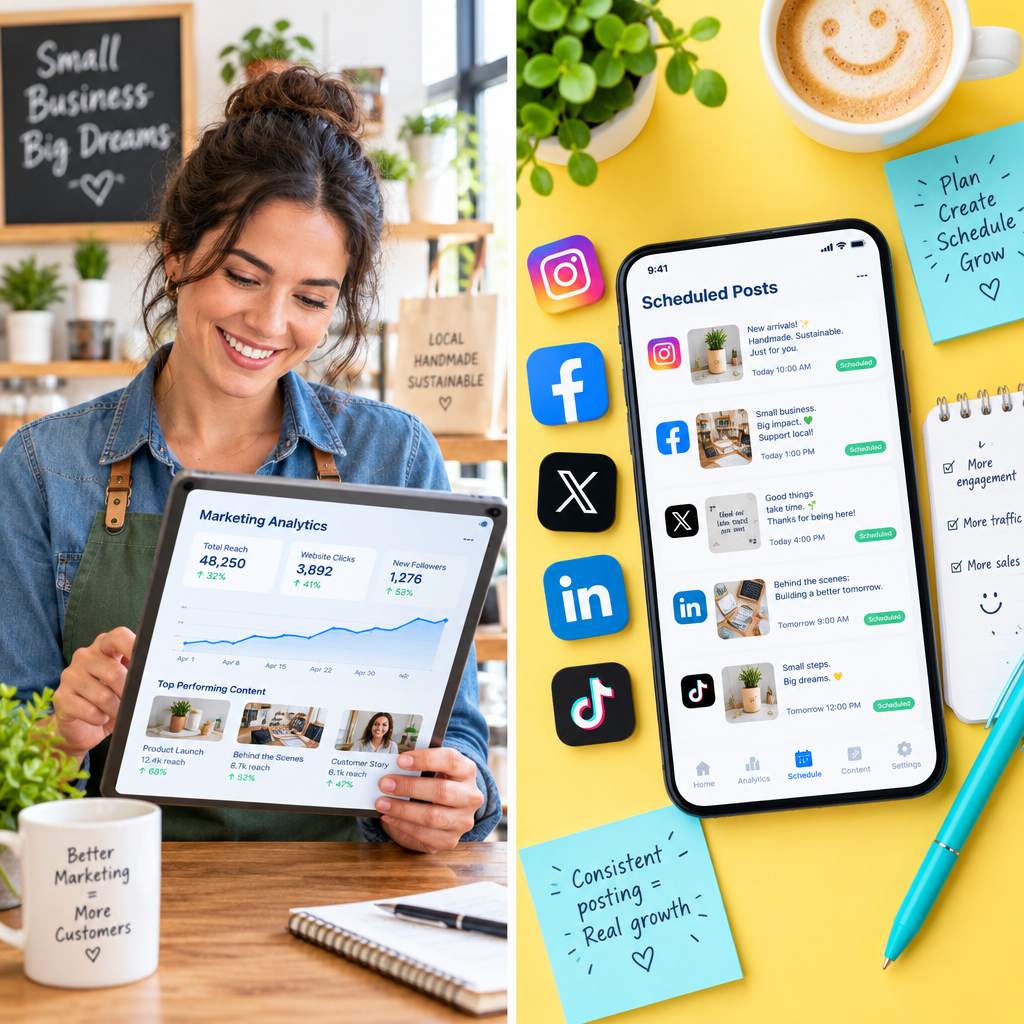
Paid advertising can drain a small budget fast if you’re not careful. AI-powered ad platforms analyze performance in real time and automatically adjust targeting, bidding, and creative to maximize results.
Instead of manually tweaking campaigns every day, you set your goals and budget, and the AI optimizes toward the outcomes you care about—whether that’s website visits, phone calls, or form submissions. Many small businesses report better return on ad spend and significantly less time spent monitoring dashboards.
This doesn’t mean you set it and forget it entirely. Regular check-ins are still important. But the day-to-day adjustments that used to eat up hours now happen automatically, guided by machine learning algorithms that process millions of data points.
Choosing the Right Tools for Your Business
Not every AI tool is a good fit for every business. Start by identifying your biggest time drains. Is it social media? Email marketing? Customer follow-up?
Look for platforms that integrate with the systems you already use. Many popular tools like Mailchimp, HubSpot, and Hootsuite have built-in AI features, so you might not need to add another subscription. The Federal Trade Commission also offers guidance on evaluating marketing technology to ensure you’re choosing reputable providers.
Start small. Pick one or two tasks to automate, test the results, and expand from there. The goal is to save time without overwhelming yourself with new software to learn.
Keeping the Human Touch Alive
The best use of AI in small business marketing is invisible to your customers. They still feel the warmth and authenticity that drew them to you in the first place—they just see it more consistently and more often.
AI handles the logistics, the scheduling, the data crunching. You handle the relationships, the creative vision, and the community connection. Together, that combination lets you compete with larger competitors without burning out your small team.
As Forbes has noted in recent small business coverage, the businesses thriving today are the ones using technology to amplify—not replace—what makes them special.
If you’re curious about how smarter marketing systems could free up time in your week, we’d love to chat. Reach out to our team to explore what’s possible for your business, and let’s find ways to work smarter together.