
Have you ever calculated what it truly costs to keep your phone lines staffed during business hours—and beyond?
For small local businesses, the decision between deploying an AI chatbot versus customer service cost investments in human staff can feel overwhelming. Both paths promise better customer experiences, but the financial realities look very different when you run the numbers. Let’s walk through what each option actually costs, where hidden expenses hide, and how to think about this choice for your own operation.
Understanding AI Chatbot Versus Customer Service Cost Fundamentals
At first glance, the math seems simple: software versus salaries. But the true comparison runs deeper than monthly invoices.
A customer service representative in most local markets earns between $28,000 and $42,000 annually, plus payroll taxes, benefits, training time, and management overhead. For a single full-time employee, your all-in cost often reaches $50,000 or more per year. If you need coverage beyond standard business hours, you’re looking at multiple hires or expensive overtime.
AI chatbot platforms, by contrast, typically charge subscription fees ranging from $50 to $500 monthly for small business plans, depending on conversation volume and feature sets. Setup and customization might add a one-time cost of $500 to $3,000, but after that, the bot handles unlimited conversations simultaneously, 24 hours a day, without sick days or vacation requests.
The U.S. Small Business Administration offers helpful resources on calculating true employee costs, which many business owners underestimate by 25% or more.
Where AI Chatbot Versus Customer Service Cost Differences Show Up
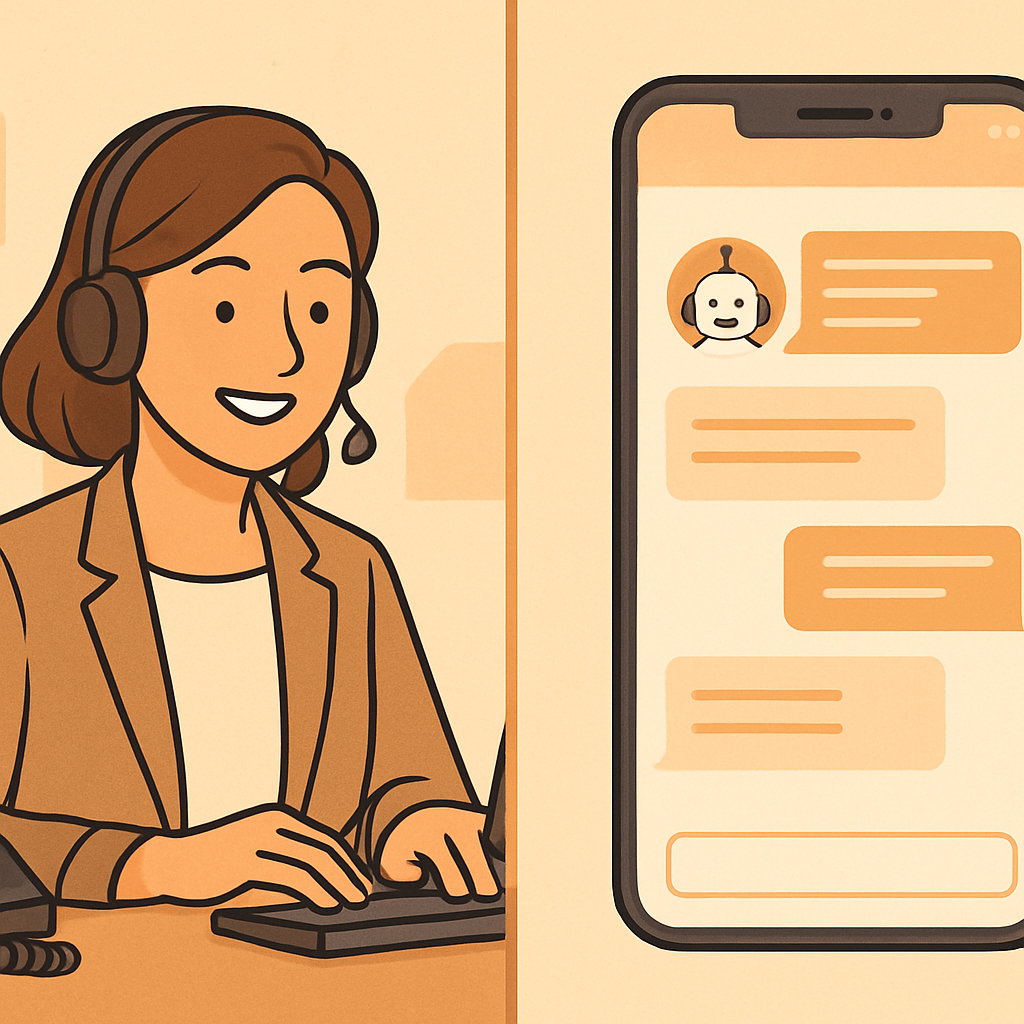
The gap widens when you examine what happens during peak periods and off-hours.
Human staff can only handle one conversation at a time—maybe two if you’re skilled at juggling hold buttons. During a busy morning rush or a local event that drives phone traffic, customers wait or hang up. Every missed call is a potential lost sale or a frustrated neighbor who chooses a competitor.
Chatbots scale instantly. Whether three people ask questions simultaneously or thirty, response time stays consistent. For businesses that experience seasonal surges or unpredictable spikes, this elasticity eliminates the painful choice between overstaffing during slow periods or understaffing when you’re swamped.
After-hours coverage deserves special attention. Hiring a night shift or weekend team can double your labor costs, yet many customers now expect answers outside traditional 9-to-5 windows. A chatbot fills that gap at no additional cost, capturing inquiries that would otherwise vanish into voicemail.
The Hidden Costs Many Overlook
- Turnover and retraining: Customer service roles average 30-45% annual turnover in many markets, meaning you’re constantly recruiting and training replacements.
- Workspace and equipment: Each employee needs a desk, computer, phone system, and physical space—costs that evaporate with software.
- Management time: Supervising staff, handling scheduling conflicts, and managing performance takes hours each week that you could spend growing the business.
- Chatbot maintenance: While lower than labor costs, bots require periodic updates, conversation flow refinements, and occasional troubleshooting.
What AI Chatbot Versus Customer Service Cost Means for Quality
Price matters, but so does the experience your customers receive.
Human representatives excel at empathy, complex problem-solving, and reading between the lines when someone’s frustrated or confused. They build rapport, remember repeat customers, and handle nuanced situations that require judgment calls. For businesses where relationships drive loyalty, that human touch remains irreplaceable.
Modern chatbots have improved dramatically, especially for routine questions: hours of operation, pricing, appointment availability, basic troubleshooting. They’re patient, never have bad days, and deliver consistent information every time. But when conversations veer into unusual territory or require genuine emotional intelligence, even sophisticated AI hits limits.
The sweet spot for many local businesses? A hybrid model where chatbots handle high-volume simple inquiries and route complex issues to human staff, maximizing both efficiency and customer satisfaction.
Calculating Your Break-Even Point

The right choice depends on your conversation volume and complexity.
If you field fewer than 50 customer inquiries weekly and most require personalized attention, a part-time human employee might cost less than implementing and maintaining a chatbot system—especially when you factor in your time learning the platform.
But if you’re managing 200+ contacts monthly, many asking similar questions about services, pricing, or scheduling, the AI chatbot versus customer service cost equation tips heavily toward automation. A $200/month chatbot that handles 80% of routine questions frees your human team (or your own time) to focus on high-value interactions that actually grow revenue.
The Federal Trade Commission reminds businesses that whether using chatbots or human agents, transparency and honesty in customer communications remain non-negotiable.
Making the Decision for Your Local Business
Start by auditing your current customer interaction patterns for one month:
- Count total inquiries (phone, email, chat, social media messages)
- Categorize them: How many could a well-programmed bot answer?
- Note when they arrive: Do you need 24/7 coverage or just extended hours?
- Calculate what you’re losing: missed calls, delayed responses, your own time spent answering repetitive questions
Then price both paths honestly. Include all the hidden costs we’ve discussed, and consider starting small—perhaps a chatbot for after-hours and weekends while keeping human staff during peak daytime hours.
Remember, this isn’t a permanent, irreversible choice. Many businesses start with one approach, gather real-world data, and adjust. The goal isn’t perfection; it’s serving your customers well while keeping your business sustainable.
If you’re weighing these options for your own operation and want to talk through what might work best in the local area, we’d be happy to share what we’ve learned. Stop by, give us a call, or send a message—we’re here to help our neighbors make smart decisions that fit their unique situations.