
Did you know that many small businesses are already using artificial intelligence in their marketing—often without realizing it? If you’ve been curious about building an AI marketing budget for small businesses but aren’t sure where to start or what to include, you’re in the right place. Let’s walk through the practical pieces that go into a smart, realistic plan.
Understanding Your AI Marketing Budget for Small Businesses
The first thing to know is that an AI marketing budget for small businesses doesn’t have to be overwhelming or expensive. Unlike enterprise-level tools that cost thousands per month, today’s landscape offers plenty of accessible options for local businesses. Your budget will typically cover three main areas: the software or platforms you use, any training or setup help you need, and the time investment to learn and manage the tools.
Start by identifying what you actually want AI to help with. Are you looking to automate email responses, write social media posts faster, improve your website’s search visibility, or analyze customer data? Each goal might need a different tool, and understanding your priorities will keep your spending focused and effective.
Core Tools and Platforms to Budget For

Most small businesses find value in a few key categories of AI tools. According to the Federal Trade Commission, it’s important to understand what AI tools actually do before committing your budget, so you can set realistic expectations.
Here’s what many businesses include:
- Content creation assistants: Tools that help write blog posts, social media captions, or email newsletters, typically ranging from free tiers to about thirty dollars per month.
- Chatbot or customer service automation: Software that answers common questions on your website, with costs varying from free basic options to a hundred dollars monthly for advanced features.
- Email marketing platforms with AI features: Services that optimize send times, personalize subject lines, or segment your audience, usually between twenty and eighty dollars per month depending on list size.
- Social media scheduling with AI optimization: Tools that suggest best posting times and help create content, often in the fifteen to fifty dollar monthly range.
- Analytics and insights platforms: Software that spots patterns in your customer data, with many offering free starter plans or paid tiers around fifty to one hundred fifty dollars monthly.
You don’t need all of these right away. Most successful small businesses start with one or two tools, learn them well, then add others as needed.
Training and Learning Resources in Your AI Marketing Budget
One often-overlooked piece of an AI marketing budget for small businesses is education. The good news is that many quality learning resources are free or very affordable. Most AI platforms offer their own tutorials, webinars, and documentation at no charge. YouTube channels from reputable marketing educators provide step-by-step guides, and many public libraries now offer free access to online learning platforms.
You might also budget for a one-time consultation with a marketing professional who can help you choose the right tools and set them up properly. This upfront investment—often a few hundred dollars—can save you from purchasing the wrong software or spending months trying to figure things out alone. The Small Business Administration offers guidance on marketing investments that can help you think through these decisions.
Ongoing Costs Beyond the Monthly Subscription
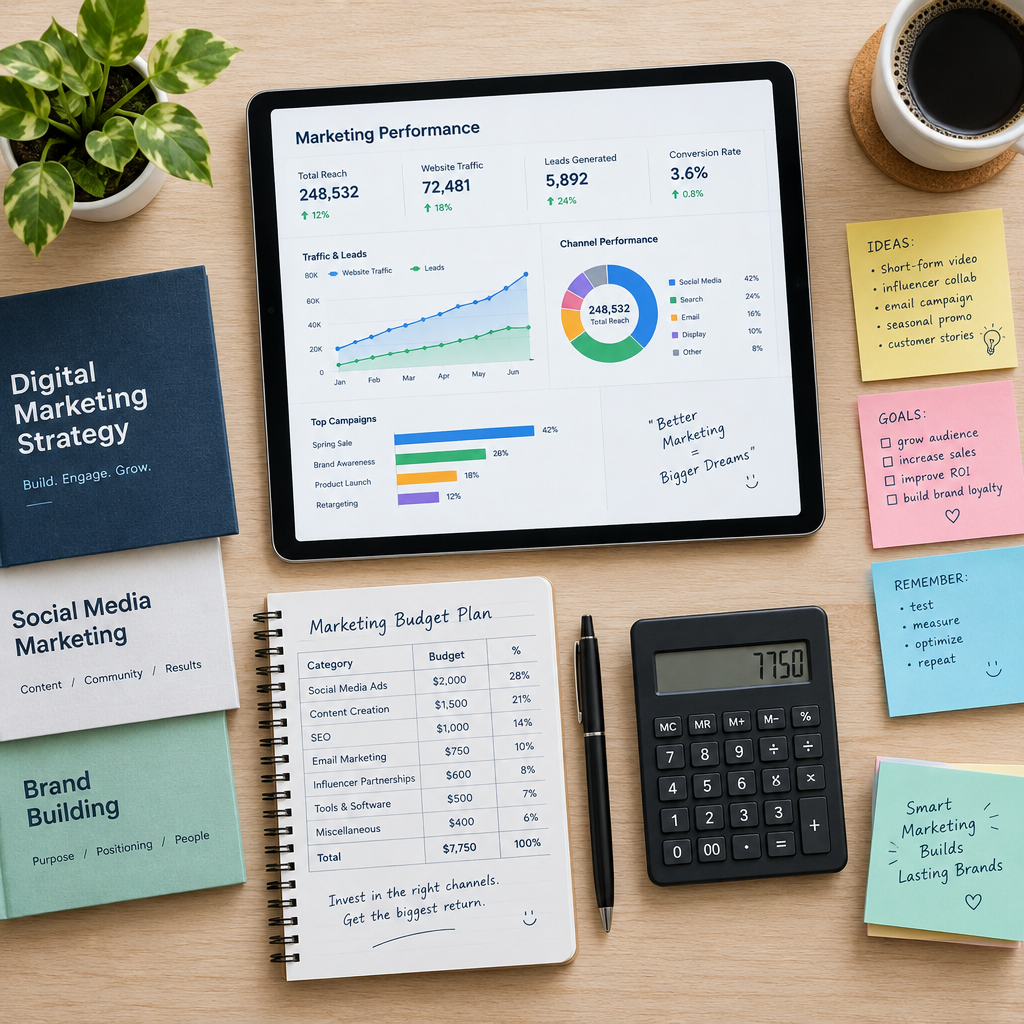
When planning your AI marketing budget for small businesses, remember that subscription fees aren’t the only expense. Many AI tools charge based on usage—the number of emails sent, words generated, or customer interactions handled. As your business grows, these variable costs can creep up, so it’s smart to check the pricing structure carefully.
You’ll also want to factor in integration costs. Sometimes connecting your AI tool to your existing website, email platform, or customer database requires a plugin, additional software, or a few hours of technical help. And don’t forget the value of your own time or a team member’s time spent managing these tools, reviewing AI-generated content, and making sure everything stays on-brand.
Starting Small and Scaling Smartly
The beauty of modern AI marketing tools is that you can start incredibly small. Many businesses begin with just a free or low-cost tool, see what works, and gradually expand. This approach lets you test results before committing larger amounts of money. A sensible first-year budget might be as modest as three hundred to six hundred dollars total, covering a couple of basic subscriptions and perhaps one educational resource or consultation.
As you gain confidence and see measurable results—whether that’s time saved, more website visitors, or better engagement on social posts—you can thoughtfully add more sophisticated tools. This gradual approach also gives you time to learn what your specific business actually needs, rather than paying for features you’ll never use.
Making Your AI Investment Work Locally
For businesses serving a local community, AI tools can be especially valuable for staying visible and connected. Tools that help you maintain an active social media presence, respond quickly to customer questions, and keep your Google Business Profile updated can make a real difference in how often neighbors discover and remember you.
When you’re building your budget, think about which tasks take up the most time or which marketing activities you’ve been putting off because they feel overwhelming. That’s often where AI can provide the most immediate value, freeing you up to focus on the parts of your business that truly need your personal attention—like serving customers and building relationships in your community.
If you’re thinking about how AI could fit into your own marketing efforts and want to talk through what makes sense for your situation, we’d be happy to chat. Reach out anytime—we love helping local businesses find practical solutions that actually work.
1 thought on “Small Business AI Marketing Budget: What to Include”
Comments are closed.