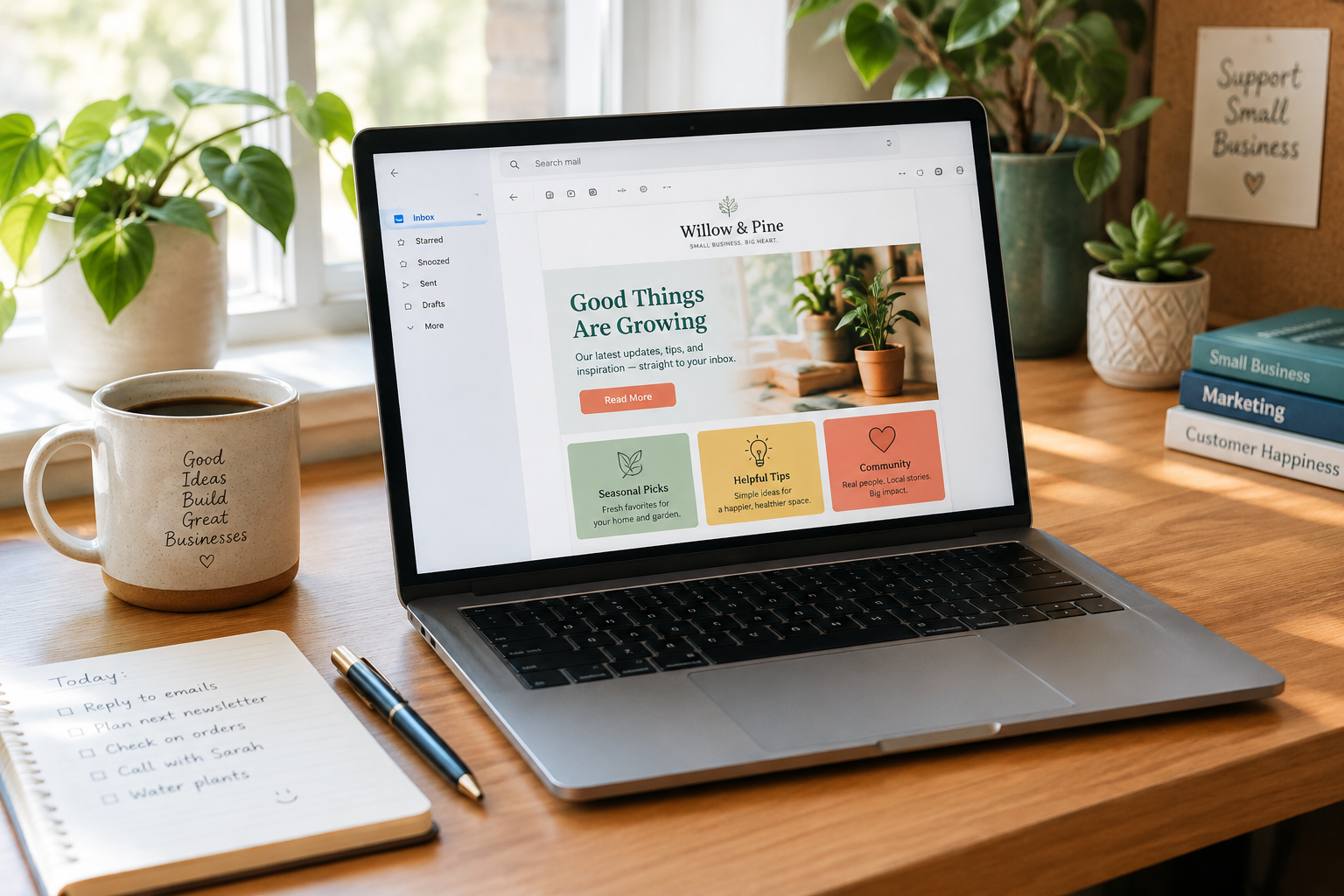
Did you know that small businesses waste an average of five hours per week writing and scheduling email campaigns? If you’re a local business owner juggling inventory, customer service, and payroll, those hours add up fast. The good news is that AI for small business email marketing campaigns can help you reclaim that time while staying connected to your customers in meaningful ways.
Artificial intelligence isn’t just for tech giants anymore. Today’s AI tools are built with small businesses in mind, offering practical ways to write better emails, understand what your customers want, and send the right message at the right time. Here’s how you can put this technology to work without a computer science degree or a big budget.
Understanding AI for Small Business Email Marketing Campaigns
When we talk about using AI for small business email marketing campaigns, we’re really talking about smart software that learns from patterns. These tools can look at which emails your customers open, what times they’re most likely to read, and which subject lines get clicks. Then they use that information to help you make better decisions.
Most AI email platforms work alongside the tools you already use. They don’t replace your personal touch—they enhance it. Think of AI as a helpful assistant who handles the repetitive tasks so you can focus on the creative strategy and personal relationships that make your business special.
Writing Better Email Content with AI for Small Business Email Marketing Campaigns

One of the most time-consuming parts of email marketing is simply writing the copy. AI writing assistants can help you draft everything from welcome emails to seasonal promotions. You provide the key points and your brand voice, and the AI suggests complete drafts you can edit and personalize.
These tools are especially helpful when you’re staring at a blank screen at the end of a long workday. They can generate multiple subject line options, suggest different ways to phrase your call-to-action, and even adapt your tone for different audience segments. The Federal Trade Commission reminds businesses to always review AI-generated content for accuracy and compliance, which is good practice anyway.
The key is to always add your own personality and local knowledge. Your customers want to hear from you, not a robot, so use AI as a starting point and then make it your own.
Personalizing Messages Without the Manual Work
Personalization used to mean manually sorting your email list into groups and writing different versions of the same email. AI changes that equation entirely. Modern platforms can automatically segment your audience based on purchase history, browsing behavior, location, and dozens of other factors.
For a local business, this might mean sending different offers to first-time visitors versus loyal regulars, or highlighting products based on what each customer has looked at on your website. AI can insert personalized product recommendations, adjust send times for each recipient’s timezone and habits, and even predict which customers are most likely to make a purchase soon.
The result feels personal to your customers because it is—AI just handles the logistics of delivering the right message to each person.
Optimizing Send Times and Frequency Using AI for Small Business Email Marketing Campaigns
Timing matters more than most business owners realize. Send an email too early and it gets buried. Too late and your customer has already made plans. Too often and you’re annoying. Not often enough and they forget about you.
AI solves this by analyzing when each person on your list is most likely to open and click. According to research from the U.S. Small Business Administration, targeted marketing strategies significantly improve customer engagement. Some AI platforms will automatically schedule each email to arrive at the optimal moment for that specific recipient.
These systems also monitor engagement patterns to recommend how often you should email different segments. Your most engaged customers might welcome weekly updates, while others prefer monthly check-ins.
Measuring Results and Learning What Works
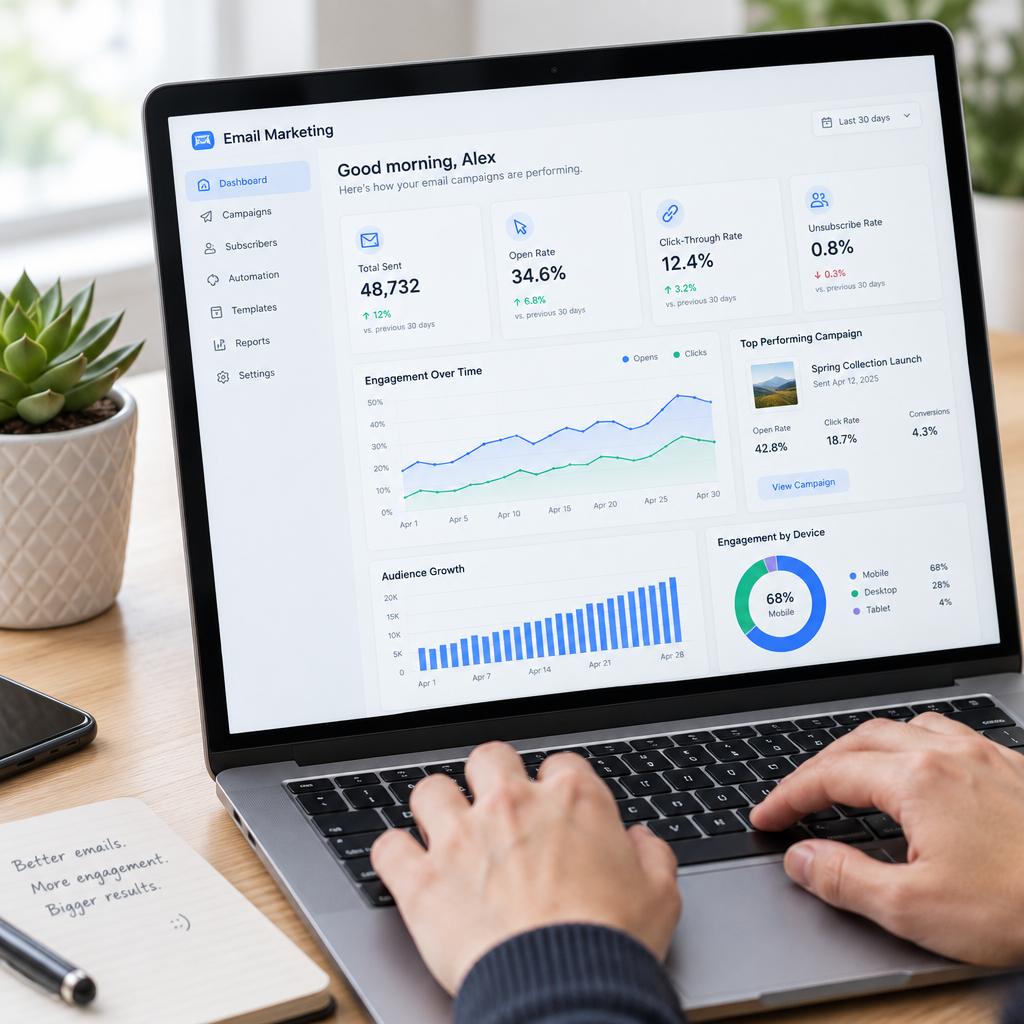
AI really shines when it comes to understanding your results. Instead of manually comparing open rates and click-throughs across dozens of campaigns, AI dashboards show you the patterns that matter.
You’ll see which types of subject lines work best for your audience, what content drives the most visits to your location or website, and which campaigns actually lead to sales. Many platforms use predictive analytics to forecast the performance of a campaign before you even send it.
This kind of insight helps you get smarter with every email you send, continuously improving your results without constantly starting from scratch.
Getting Started with AI Email Tools in Your Business
You don’t need a huge budget to begin using AI for small business email marketing campaigns. Many popular email platforms now include AI features in their standard plans. Start by exploring the tools you already subscribe to—you might be surprised by the AI capabilities hiding in your existing software.
Here are some practical first steps:
- Test AI-generated subject lines against your usual ones to see what performs better
- Enable automatic send-time optimization for one campaign and compare results
- Use AI writing assistance to draft your next promotional email, then personalize it
- Set up basic segmentation rules and let AI refine them based on behavior
- Review AI-generated performance reports to identify your best-performing content
Remember that AI works best when you feed it good information. Keep your email list clean, track your goals consistently, and always review AI suggestions before hitting send.
Ready to save time and connect more effectively with your customers? Visit us to learn more about how we’re using smart tools to serve our local community better. We’d love to show you what’s possible when technology and personal service work together.