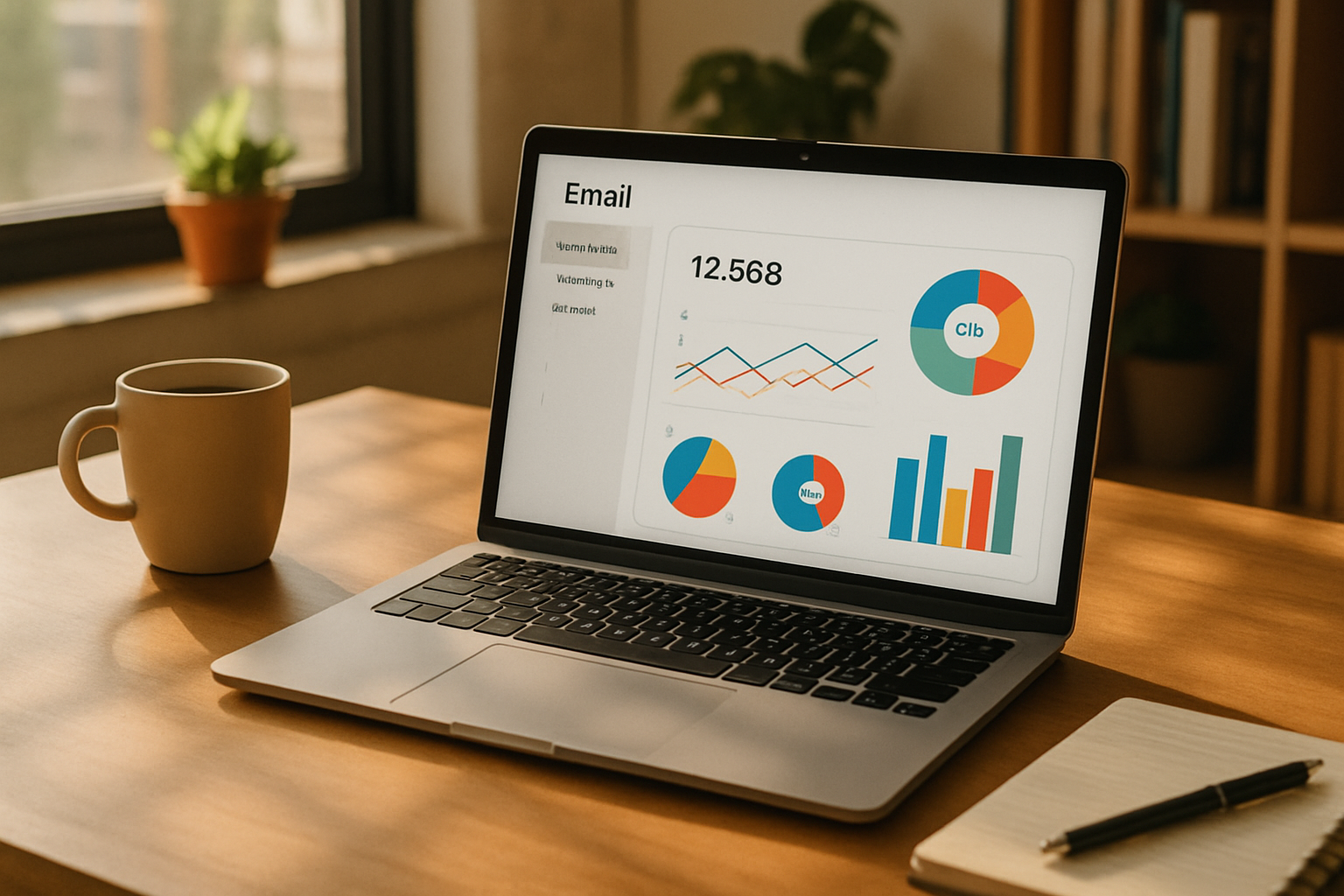
Did you know that businesses using email marketing see an average return of forty-two dollars for every dollar spent? With numbers like that, choosing the right email strategy matters more than ever.
We’ve been helping local businesses connect with their customers through email for years, and lately we’ve noticed a major shift. Artificial intelligence has entered the chat—literally. The question we hear most often now is whether AI-powered tools actually outperform the traditional methods that have worked reliably for decades. Let’s break down this AI email marketing comparison so you can make the smartest choice for your business.
What Makes AI Email Marketing Different
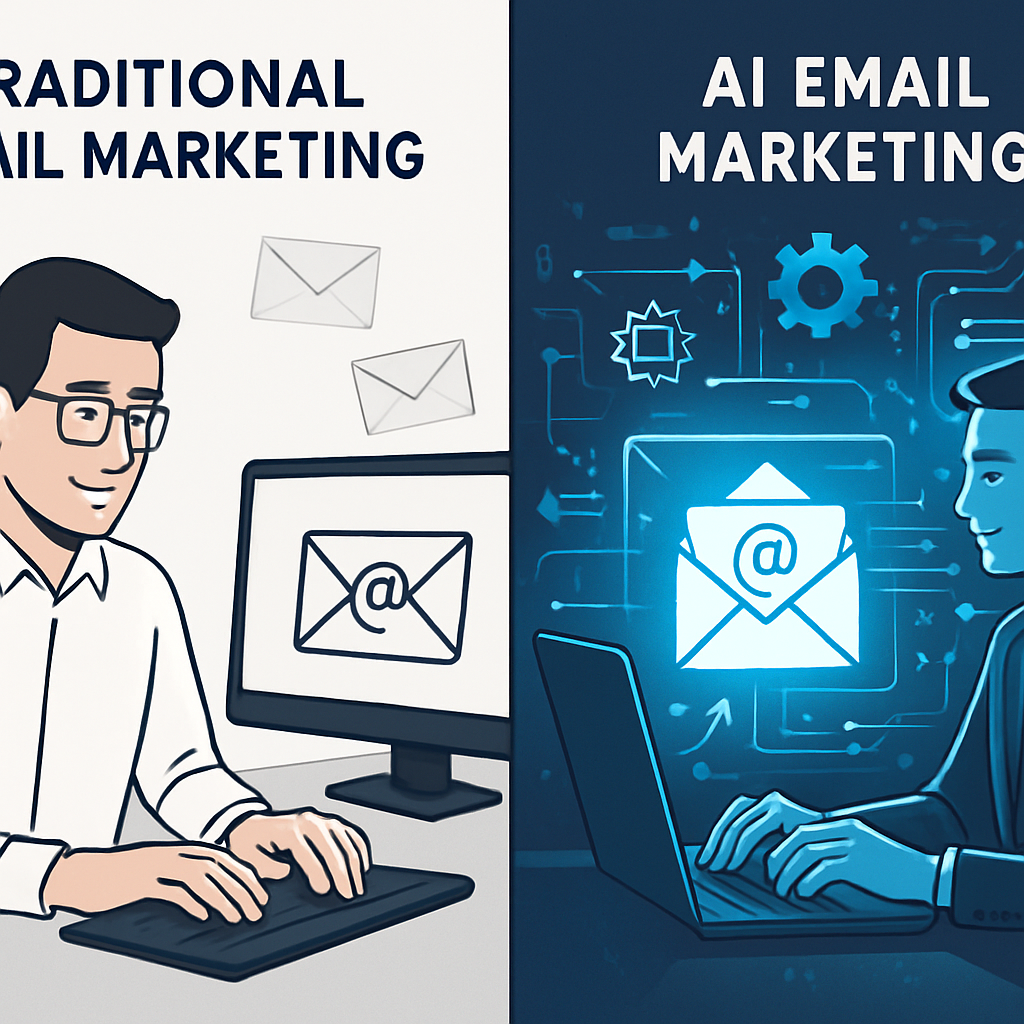
Traditional email marketing relies on a human being to write every message, decide when to send it, and manually segment subscriber lists. You craft the subject line, choose the images, and hit send based on your best guess about timing.
AI email marketing flips that model. These platforms use machine learning to analyze subscriber behavior—open rates, click patterns, purchase history—and automatically optimize elements like:
- Send times tailored to when each individual subscriber is most likely to engage
- Subject line variations tested and selected in real-time
- Content personalization that goes beyond inserting a first name
- Predictive analytics that identify which subscribers are most likely to convert
The technology learns from millions of data points across campaigns, constantly refining its approach. It’s like having a tireless assistant who never sleeps and remembers every interaction with every subscriber.
The Real-World AI Email Marketing Comparison: Speed and Scale
Here’s where AI shines brightest. If you’re sending a weekly newsletter to three hundred subscribers, you can probably manage that workload manually without breaking a sweat. But what happens when your list grows to three thousand? Or when you want to send different messages to different customer segments based on their interests and behaviors?
Traditional methods require you to manually create those segments, write multiple versions of your message, and schedule everything individually. An AI platform does this automatically, testing variables you might never have considered. According to federal CAN-SPAM guidelines, every marketing email must include accurate sender information and an easy unsubscribe option—and AI tools help ensure compliance across every automated message.
The speed advantage is real. What might take you three hours to set up manually can be deployed in minutes with AI assistance. For small business owners juggling a dozen responsibilities, that time savings is meaningful.
But Speed Isn’t Everything
We’ve also seen situations where AI gets it wrong. One local client told us about an AI system that kept sending promotional emails to customers who had just made a purchase—exactly the wrong timing. The algorithm hadn’t been trained to recognize that a satisfied customer might need a different message than someone browsing.
The Human Touch Still Matters in This AI Email Marketing Comparison
Traditional email marketing has one advantage that no algorithm can replicate: genuine human intuition. When you write an email yourself, you understand the local context. You know that the community event happening this weekend matters to your customers. You remember that your town just went through a challenging situation, and your tone should reflect empathy.
AI can analyze data, but it doesn’t live in your community. It doesn’t know that your customers prefer a casual, friendly tone or that certain phrases resonate locally. The Small Business Administration emphasizes that authentic relationship-building drives long-term customer loyalty—and that authenticity is still a human strength.
We’ve found that the most effective approach often combines both. Use AI to handle the technical optimization and timing, but keep a human in the creative driver’s seat for messaging, voice, and strategic decisions.
Cost Considerations: Which Option Fits Your Budget
Traditional email platforms often start around twenty to fifty dollars per month for basic plans. You’re paying primarily for the delivery infrastructure and basic automation like welcome sequences or birthday emails.
AI-powered platforms typically cost more—sometimes significantly more. Premium AI features might add an extra fifty to two hundred dollars monthly, depending on your list size and the sophistication of the tools. For very small businesses just starting out, that difference matters.
The return-on-investment question comes down to your available time versus available budget. If you have more time than money, traditional methods work fine. If your time is your scarcest resource, AI tools might pay for themselves quickly through time savings and improved conversion rates.
What Actually Works Better for Small Local Businesses
After comparing both approaches extensively, here’s what we’ve learned: there’s no universal winner in this AI email marketing comparison. The best choice depends entirely on your specific situation.
Choose traditional email marketing if you:
- Have a smaller list (under one thousand subscribers)
- Enjoy writing and want full creative control
- Send occasional campaigns rather than complex automated sequences
- Operate on a tight marketing budget
- Value simplicity over advanced features
Consider AI-powered tools if you:
- Manage larger lists or multiple customer segments
- Want to test and optimize continuously without manual effort
- Need sophisticated automation based on customer behavior
- Have budget for premium tools but limited time for email tasks
- Plan to scale your email program significantly
Many small businesses we work with start with traditional methods and gradually adopt AI features as they grow. That progressive approach lets you learn email marketing fundamentals before layering on complexity.
Making the Right Choice for Your Business
The most important factor isn’t which technology you choose—it’s whether you’re actually connecting with your customers in meaningful ways. We’ve seen simple, heartfelt emails outperform sophisticated AI campaigns because they spoke directly to what mattered to the community.
Your customers don’t care whether a human or an algorithm scheduled their email. They care whether the message is relevant, timely, and valuable to them. Keep that perspective front and center, and you’ll succeed with either approach.
If you’re trying to figure out which email strategy makes sense for your business, we’d love to chat about your specific goals and challenges. Stop by our location in the local area, give us a call, or send us a message. We’re here to help you connect with your customers in whatever way works best for your unique situation.