Ever wonder why some local businesses seem to appear everywhere online while others struggle to get noticed? The answer often comes down to smart advertising choices—and the big question many owners ask is about Google Ads versus Facebook Ads for their marketing budget.
Both platforms can deliver results, but they work in fundamentally different ways. Understanding these differences helps small business owners invest their dollars where they’ll see the best return. Let’s break down what each platform does well, where they fall short, and how to decide which one makes sense for your business right now.
How Google Ads Versus Facebook Ads Reach Your Customers
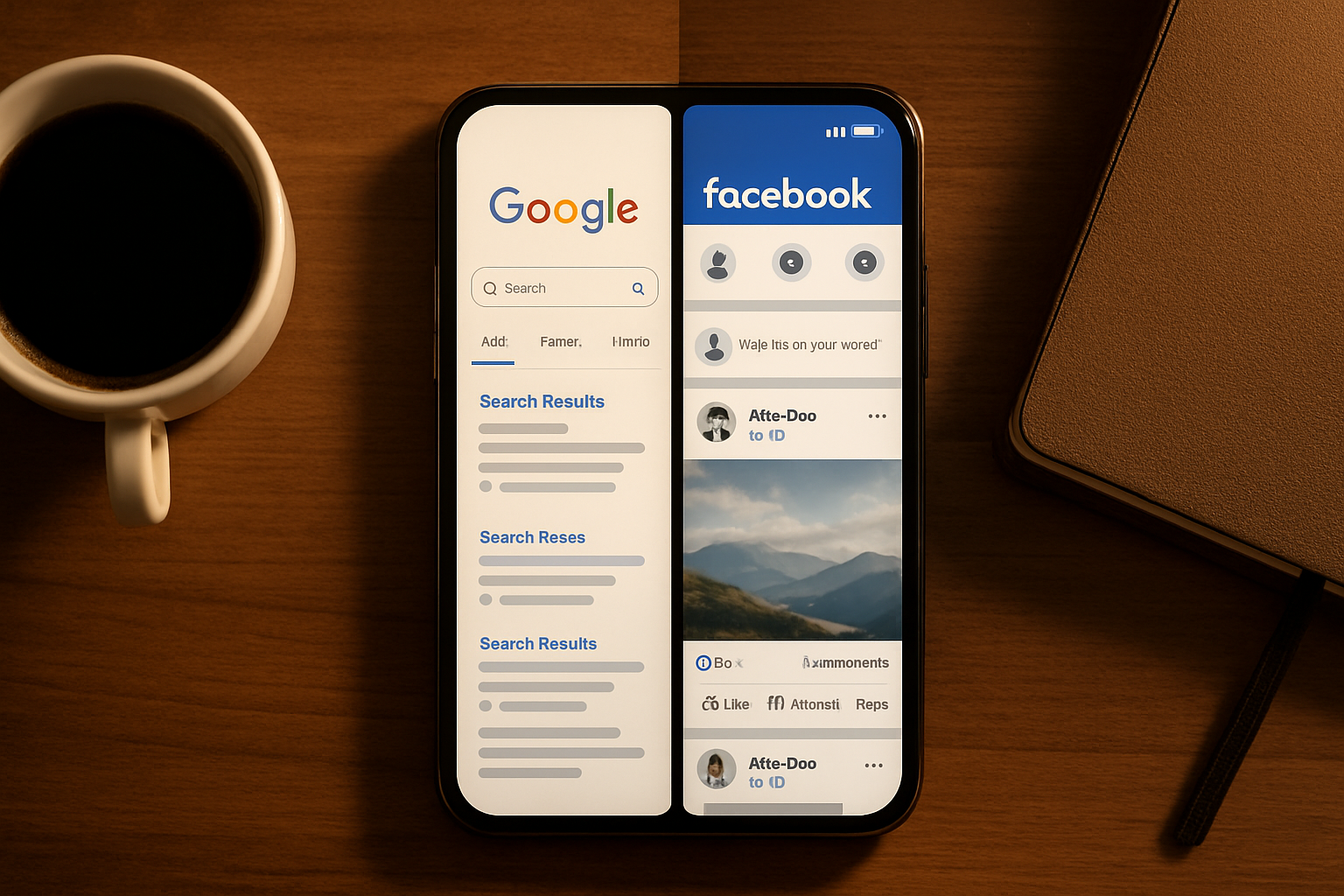
Google Ads captures people actively searching for what you offer. When someone types “coffee shop near me” or “emergency plumber,” Google shows your ad to people with immediate intent. They’re looking for a solution right now, and your business can be the answer.
Facebook Ads work differently. They interrupt people browsing their feed, showing your business to users based on interests, demographics, and behaviors. Someone scrolling through vacation photos might see your ad for yoga classes because Facebook knows they recently searched fitness topics or belong to wellness groups.
The core distinction: Google catches people hunting for solutions. Facebook introduces your business to people who fit your customer profile but aren’t necessarily shopping at that moment.
Cost and Budget Considerations for Google Ads Versus Facebook Ads
Google Ads typically costs more per click, especially for competitive local keywords. A click might run anywhere from two dollars to over twenty dollars depending on your industry. However, that click often represents someone ready to buy, book, or visit.
Facebook Ads generally offer cheaper clicks—sometimes under a dollar—but those clicks don’t always convert immediately. You’re building awareness and consideration, which means the path from click to customer can be longer.
For small businesses with tight budgets, this creates an important choice:
- Spend more per click on high-intent Google searchers
- Spend less per click reaching more people on Facebook who need more nurturing
- Split your budget between both platforms to cover immediate needs and long-term awareness
Neither approach is wrong. The right answer depends on your cash flow, how quickly you need results, and whether your service is something people search for versus something they discover.
Which Platform Wins for Local Foot Traffic
Google dominates when driving people to physical locations. Local service ads, map listings, and search ads with location extensions put your business in front of nearby customers at the exact moment they need you. According to the Google Consumer Insights team, mobile searches with “near me” have grown significantly, and those searchers often visit a store within a day.
Facebook can build local awareness through geo-targeted ads, and the platform excels at promoting events, special offers, and community engagement. But when someone needs a service right now, they’re far more likely to open Google than scroll Facebook hoping to stumble on the answer.
For businesses relying on walk-ins, appointments, or emergency calls, Google typically delivers more immediate, measurable foot traffic and phone calls.
Measuring Success: What Google Ads Versus Facebook Ads Tell You
Google Ads provides clear cause-and-effect data. You can see exactly which search terms triggered your ad, how much each click cost, and whether that click led to a phone call, form submission, or store visit. The Federal Trade Commission emphasizes transparency in advertising, and Google’s reporting makes it straightforward to track return on ad spend.
Facebook offers detailed demographic insights—age, gender, interests—but connecting ads to actual sales can be trickier, especially for businesses without robust online checkout systems. You’ll learn a lot about who engages with your content, but tying that engagement to revenue requires more sophisticated tracking.
Both platforms require patience and testing. No campaign performs perfectly out of the gate. Expect to refine targeting, adjust ad copy, and test different approaches over several weeks before you find what resonates with your local audience.
The Hybrid Approach: Using Both Platforms Strategically
Many successful local businesses don’t choose between Google Ads versus Facebook Ads—they use both for different purposes. Google captures the low-hanging fruit: people already searching. Facebook builds the audience of future customers who don’t know they need you yet.
A coffee shop might run Google Ads for “coffee shop downtown” while using Facebook to promote a new seasonal drink to locals interested in food and dining. A home repair service could use Google for emergency calls and Facebook to stay top-of-mind for future projects.
The U.S. Small Business Administration recommends diversifying your marketing mix rather than relying on a single channel, and combining both platforms lets you cover immediate demand and long-term growth.
Making Your Decision
Start by asking what you need most right now. If you need customers this week and people actively search for your service, Google probably deserves the first dollars. If you’re building a brand, creating buzz around something new, or your service isn’t something people think to search for, Facebook can introduce you to the right audience.
Many businesses start with one platform, learn what works, then cautiously expand to the other. There’s no rule that says you must do both immediately. Begin where you’ll see results fastest, then grow your strategy as your budget and confidence increase.
If you’re wrestling with these decisions and want to talk through what makes sense for your specific situation, we’d be happy to chat. Reach out and let’s figure out the smartest path forward for your business and your budget.